
In an era dominated by digital communication, the tactile experience of writing with a handcrafted wooden pen remains an irreplaceable luxury. At WoodAnytime, we view a pen not merely as a writing instrument, but as a confluence of art, engineering, and nature.
Creating a premium wooden pen is a meticulous process that transforms a raw block of timber into a precision instrument. This guide offers a transparent, behind-the-scenes look at the craftsmanship behind our 2026 collection.
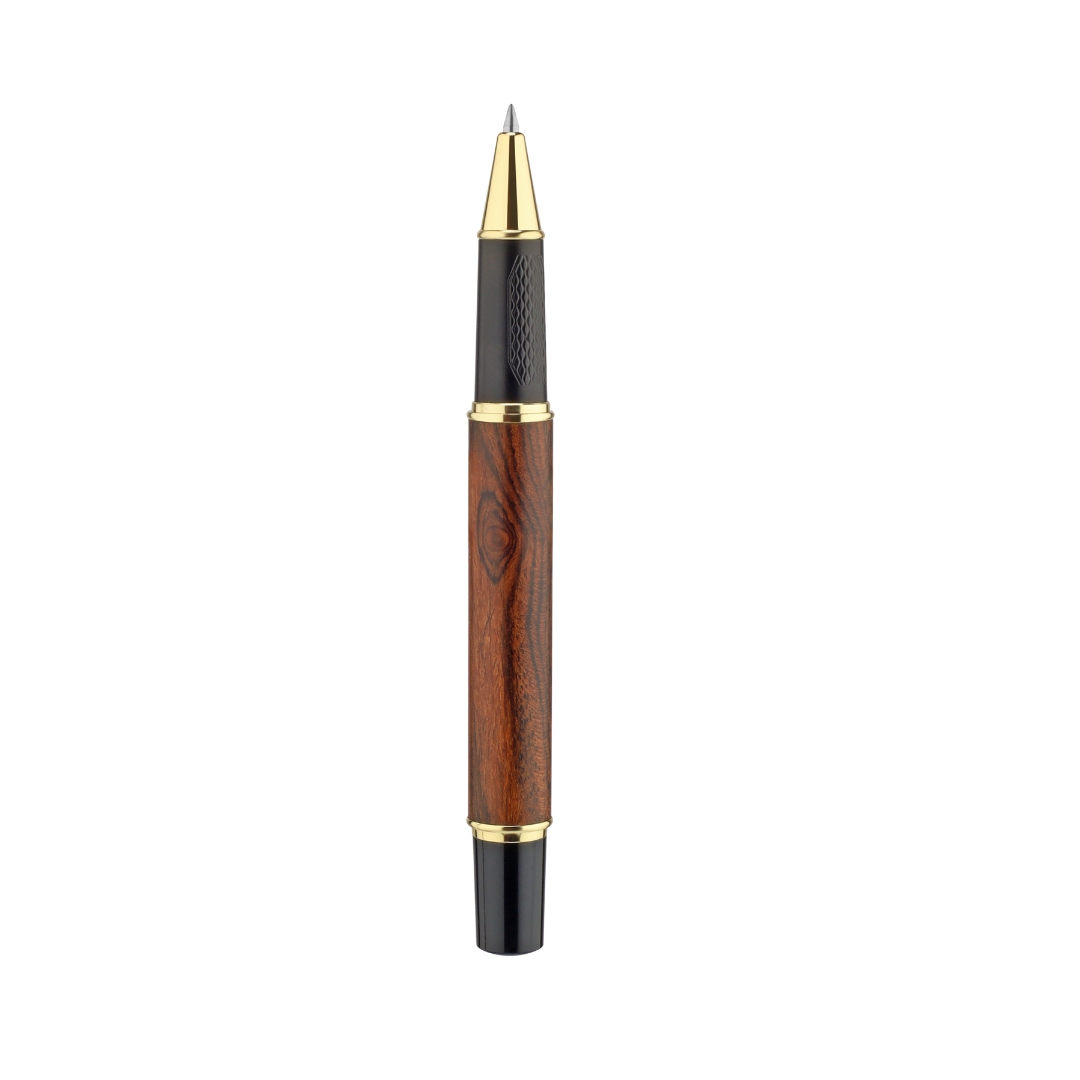
Step 1: The Selection of the Wood
The journey begins with the most critical element: the material. Not every piece of wood is suitable for pen turning. Our master craftsmen inspect timber for density, grain orientation, and moisture content.
Species Selection
- Sheesham (Indian Rosewood): Rich dark grain and natural moisture resistance.
- Mango Wood: Fine texture, sustainable, with a lighter golden hue.
- Ebony & Rosewood Exotics: Used for premium editions with added weight and balance.
Stabilisation (The 2026 Standard)
To withstand changes in humidity and temperature, the wood is impregnated with stabilising resin under pressure. This prevents warping or cracking and allows the material to achieve a high, glass-like polish.
Step 2: Preparing the Blank and Drilling
The stabilised wood is cut into blanks and drilled precisely through the centre. Even a minor deviation can affect balance and ink cartridge alignment.
Step 3: Mounting and Turning on the Lathe
Mounted on a steel mandrel, the blank is shaped on a lathe using specialised chisels to form the pen’s ergonomic profile.
Step 4: The Art of Sanding
Progressive sanding up to micro-mesh grits creates a surface so smooth that the fibres are completely sealed.
Step 5: Finishing
Depending on the aesthetic, the pen is finished with either a high-gloss CA coating or a natural wax and oil polish.
Step 6: Assembly of the Hardware
Metal components are press-fitted with exact pressure to ensure durability without damaging the wooden barrel.
Step 7: Final Quality Control
Every pen undergoes a write test, visual inspection, and final buffing before approval.
Conclusion: A Legacy in Your Hand
Each WoodAnytime pen blends traditional craftsmanship with modern precision engineering. More than a writing instrument, it is a handcrafted heirloom designed to last a lifetime.